
Above the Bridge
Cully Gage - an author you've never heard of and his stories of the old Upper Peninsula

It’s a two-hour drive to the Mackinac Bridge from where I live in Michigan’s Lower Peninsula. The bridge, an engineering marvel, was completed in 1957 and opened to traffic on November 1, two weeks before firearm deer season. At the time, it was the world’s longest suspension bridge, and is currently ranked 29th in length. Impressive! Before the bridge opened, the U.P. was accessed from the Lower Peninsula by car ferry across the Straits of Mackinac. The ferries operated only in the warmer months until a dedicated ice breaker kept the Straits open.
When I was four, my parents took my five siblings and me to see the bridge as it was being constructed. The images remain clear in my memory. As I raised my eyes along the huge south end tower, it seemed to reach the clouds. Sixty-eight years and multiple crossings later, I am still awed by the massive structure.
There are two distinct geological areas of the U.P. The western end lies atop the volcanic Canadian Shield and differs significantly from the eastern U.P., which sits on limestone. The Shield, which extends from a few miles east of Marquette westward, is rich in metal ores, including iron, copper, and nickel. The iron and copper mines drew European immigrants, especially Finns and Italians, who became little more than indentured slaves for the mine owners. Their descendants eventually settled the area alongside native tribes, often intermarrying. They remain, though the iron and copper mines are largely spent.
A talented writer grew up in this rugged, remote land of pristine lakes, basalt outcroppings, and thick forests. Charles Gage Van Riper was born in Champion, a tiny settlement west of Marquette. Van Riper recorded stories of the Upper Peninsula in his nine-volume THE NORTHWOODS READER series. Because I’m fascinated with the U.P., I bought eight of the nine volumes from eBay several years ago. I recently discovered there are five more books he wrote, and I hope to obtain them.
Under the pen name Cully Gage, Van Riper strikes a true tone in telling of the characters he knew as a boy. His writing is engaging, pure, and direct, as one might expect of someone who initially pursued his education in creative writing. What one wouldn’t expect is that Charles was a severe stutterer, a handicap he turned into a triumph.
Dr. Van Riper’s handicap was his impetus to help others with the impediment. After obtaining his PhD in psychology from the University of Iowa, he pioneered novel methods to help stutterers and became the world’s foremost speech pathologist. His work, which explored a scientific basis for stuttering, is lauded to this day. In 1936, he founded the Western Michigan University Speech Clinic and the Speech Pathology and Audiology Department. During his tenure, he wrote ten editions of speech pathology textbooks. He retired in 1974 and began his second successful career—writing about his beloved U.P. and the unique personalities he encountered as a child.
In Cully’s semi-autobiographical stories, one gets acquainted with some interesting characters. A man so shy he couldn’t propose. The town drunk who reformed, became a preacher, and relapsed. The English teacher from Boston who came looking for adventure and got a lot more than she expected. The old lumberjack who disappeared the day a huge white pine was felled. Finns and French, bats and roosters, huge bucks and insanity, it’s all told in these pages.
The vignettes also tell of the extreme conditions endured by the residents of Champion and nearby settlements, particularly the long, bitter winters. Self-sufficiency was expected, but it was also a myth. Community members took care of each other. One, an infamous poacher, made sure anyone at the brink of starvation had a haunch of venison or a string of fish surreptitiously placed on their porch in the dark of night, always accompanied by a sprig of cedar stuck through birch bark. Cully’s stories portray the trust and care the residents had for one another, essential for community harmony and survival. Theft was rare, and thieves were dealt with decisively. I get the sense that jail was a better option for the thief than the imaginative and resourceful methods employed. In a tiny settlement, it was fairly easy to identify and target the culprit.
A stone’s throw west of Champion is the former mining town of Michigamme, located on Lake Michigamme. Van Riper State Park anchors the east end of the lake, named in honor of Cully’s father, John Van Riper, who was a physician to the sparse and remote populace. There is no monument to Charles (Cully), and I think there should be one. Perhaps his writings are the most fitting monument to a man who, though he suffered from severe stuttering, became the preeminent champion for others with the handicap.
Dr. Charles (Cully) Gage Van Riper passed in 1994 at the age of 99. What a fantastic life he lived! I wish I could have sat and had a long chat with such a man. Instead, I’m reading the books he wrote, and I suppose it’s pretty much as if we are having that chat.
And now, as Paul Harvey would say, you know the rest of the story.
AUTHOR’S NOTE: Jim Harrison’s novels, TRUE NORTH and THE BIG SEVEN, and his short story collection, BROWN DOG, are set in the U.P. Harrison portrays the people and the land, particularly the unfortunate history of clear-cutting the forests of virgin white pine. I think he and Cully Gage would have gotten along just fine.
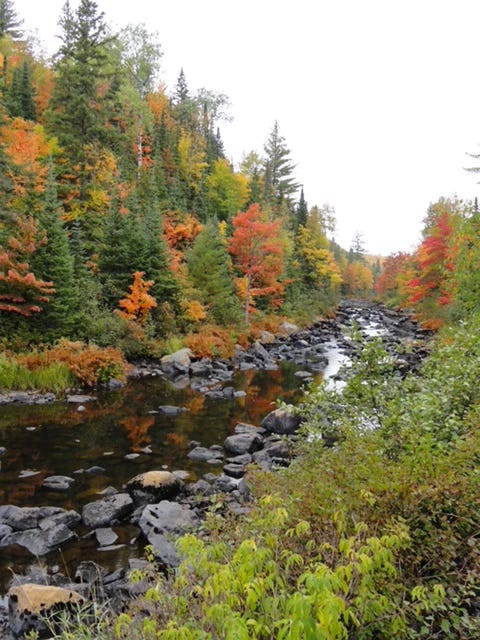
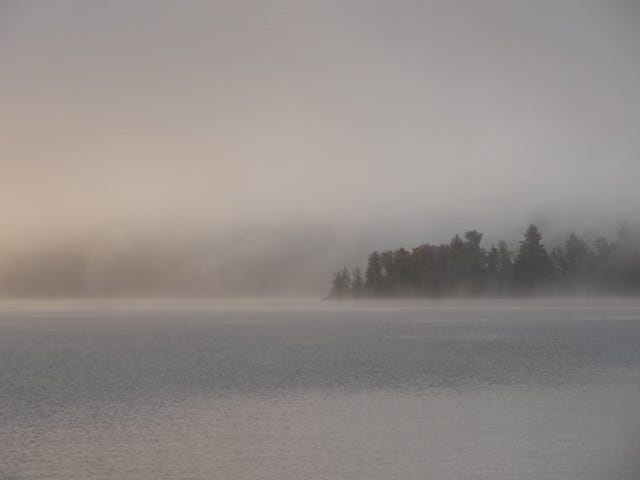
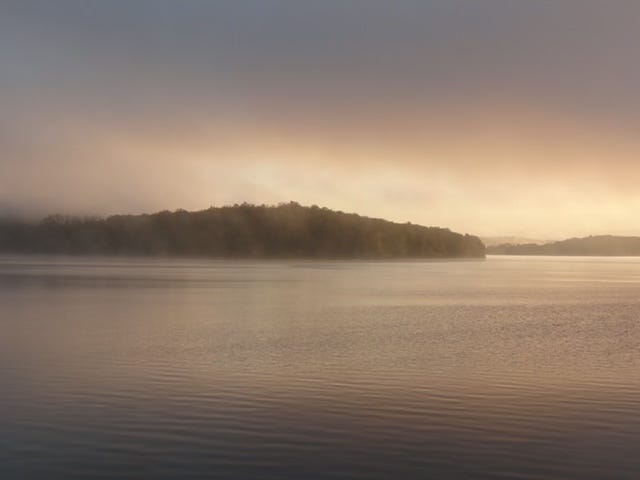
Images from Lake Michigamme and a nearby trail.
Thanks so much, Jim. The UP is hard to describe. A lot like the FL Keys in the independent attitude. It’s truly a beautiful place. One of our fav things to do is buy local smoked fish, beer, bread, and mustard and laze on a Lake Superior beach. Best picnic ever!!
Thank YOU!!! ❤️